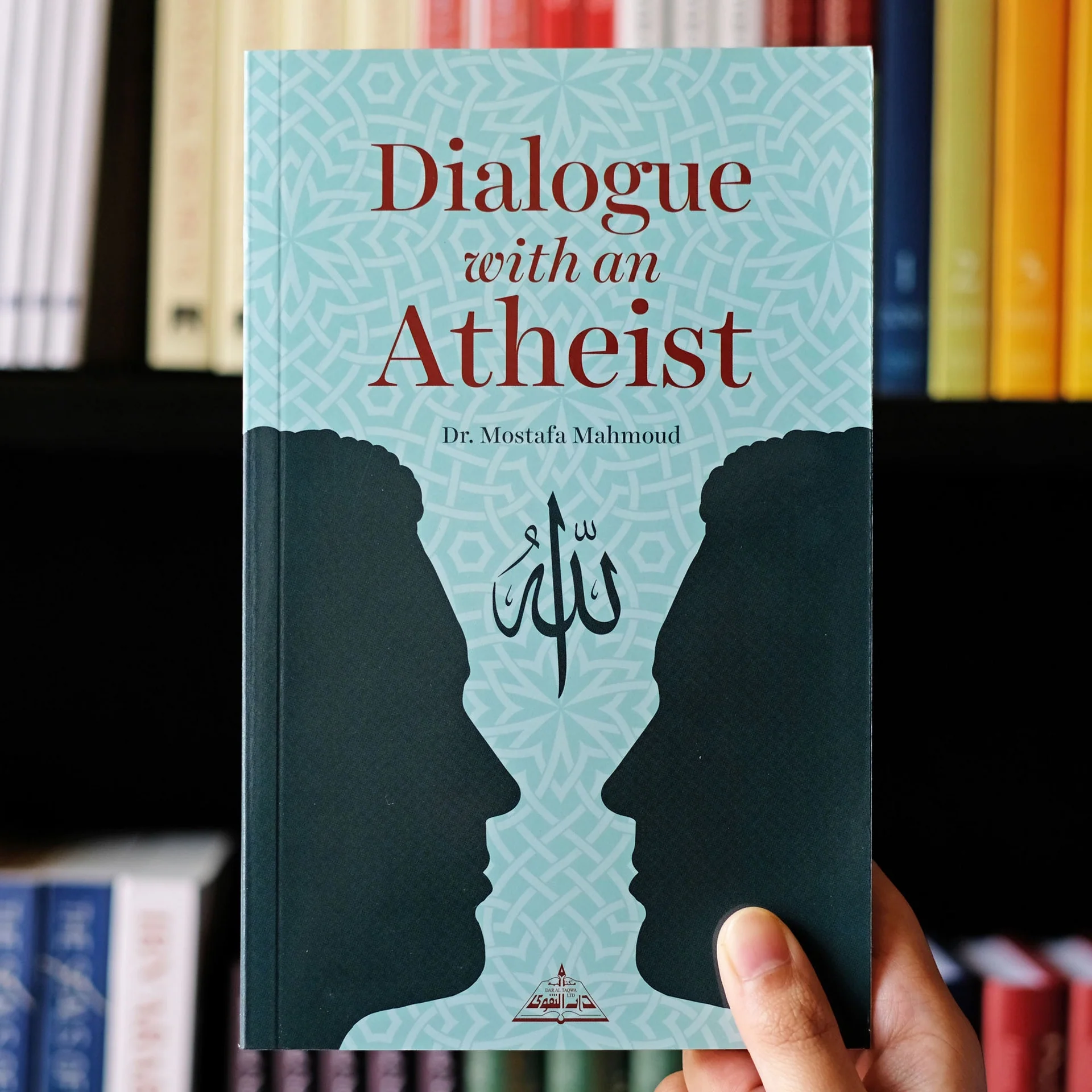
Dialogue with an Atheist
Dr Mostafa Mahmoud
Paperback
9781870580984
‘Who created the Creator, that God you talk about?’ ‘If God preordained my deeds, why should He judge me?’ ‘Why did God create Evil?’ ‘What about those not reached by the Qur’an?’ ‘Is religion an opiate?’ ‘What evidence is there that mankind have spirits and will be resurrected after death?’
These are among the fundamental questions that a Muslim believer may expect to hear, and be challenged to answer, while carrying out his or her obligation of da’wa. This term, which literally means ‘calling’ or ‘inviting’, denotes actions and words directed towards helping others to have faith - to rediscover the believer who lies deep within every human soul as part of its firth, or primordial nature.
At the same time, within human souls - including those of people who believe in God and in Divine Revelation - there is also a nafs, or ego, which is prone to doubts and hesitation. This ego or self, too, needs to be ‘called’, or ‘invited’, back to full commitment through understanding, acknowledgement, and repentance.
Questions of the type ‘Who created God’ are characteristic, as the Prophet s.a.w pointed out, of the Last Days, times when through the influence of Satanic beliefs and cultural norms the very notion of a God of any kind has been made to appear ridiculous in the eyes of many. Particularly prone to this problem are people of the ‘intellectual’ type, to whom it appears only natural and logical to question everything that human beings have traditionally held most dear.
In Dialogue with an Atheist, Dr Mostafa Mahmoud uses a series of imaginary conversations to guide the believer in their task of helping those seemingly deprived of faith in God, His Message, and His Messenger. First published in 1994, the book has been thoroughly revised and updated in the light of events and trends that have emerged during the last two decades.
Contents:
I. He begot no one, nor was He begotten
II. “If God preordained my Deeds, why should He judge?”
III. Why did God create Evil?
IV. “What about those unreached by the Qur’an?”
V. Paradise and Hell
VI. Is Religion an Opiate?
VII. Islam and Women
VIII. The Spirit
IX. The Conscience
X. Is Pilgrimage a Pagan Rite?
XI. Could Muhammad be the author of the Qur’an?
XII. The Qur’an did not come from a Human
XIII. Doubts
XIV. Religion and Evolution
XV. “There is no God but Allah”
XVI. “Kaf Ha Ya ‘Ayn. Sād”
XVII. The Miracle
XVIII. The Meaning of Religion
XIX. “We Won Worldly Happiness, and you gained Delusions”
Product Information
Product Information
Shipping & Returns
Shipping & Returns
Dialogue with an Atheist
Dialogue with an Atheist
Dr Mostafa Mahmoud
Paperback
9781870580984
‘Who created the Creator, that God you talk about?’ ‘If God preordained my deeds, why should He judge me?’ ‘Why did God create Evil?’ ‘What about those not reached by the Qur’an?’ ‘Is religion an opiate?’ ‘What evidence is there that mankind have spirits and will be resurrected after death?’
These are among the fundamental questions that a Muslim believer may expect to hear, and be challenged to answer, while carrying out his or her obligation of da’wa. This term, which literally means ‘calling’ or ‘inviting’, denotes actions and words directed towards helping others to have faith - to rediscover the believer who lies deep within every human soul as part of its firth, or primordial nature.
At the same time, within human souls - including those of people who believe in God and in Divine Revelation - there is also a nafs, or ego, which is prone to doubts and hesitation. This ego or self, too, needs to be ‘called’, or ‘invited’, back to full commitment through understanding, acknowledgement, and repentance.
Questions of the type ‘Who created God’ are characteristic, as the Prophet s.a.w pointed out, of the Last Days, times when through the influence of Satanic beliefs and cultural norms the very notion of a God of any kind has been made to appear ridiculous in the eyes of many. Particularly prone to this problem are people of the ‘intellectual’ type, to whom it appears only natural and logical to question everything that human beings have traditionally held most dear.
In Dialogue with an Atheist, Dr Mostafa Mahmoud uses a series of imaginary conversations to guide the believer in their task of helping those seemingly deprived of faith in God, His Message, and His Messenger. First published in 1994, the book has been thoroughly revised and updated in the light of events and trends that have emerged during the last two decades.
Contents:
I. He begot no one, nor was He begotten
II. “If God preordained my Deeds, why should He judge?”
III. Why did God create Evil?
IV. “What about those unreached by the Qur’an?”
V. Paradise and Hell
VI. Is Religion an Opiate?
VII. Islam and Women
VIII. The Spirit
IX. The Conscience
X. Is Pilgrimage a Pagan Rite?
XI. Could Muhammad be the author of the Qur’an?
XII. The Qur’an did not come from a Human
XIII. Doubts
XIV. Religion and Evolution
XV. “There is no God but Allah”
XVI. “Kaf Ha Ya ‘Ayn. Sād”
XVII. The Miracle
XVIII. The Meaning of Religion
XIX. “We Won Worldly Happiness, and you gained Delusions”
Original: $10.15
-70%$10.15
$3.04Product Information
Product Information
Shipping & Returns
Shipping & Returns
Description
Dr Mostafa Mahmoud
Paperback
9781870580984
‘Who created the Creator, that God you talk about?’ ‘If God preordained my deeds, why should He judge me?’ ‘Why did God create Evil?’ ‘What about those not reached by the Qur’an?’ ‘Is religion an opiate?’ ‘What evidence is there that mankind have spirits and will be resurrected after death?’
These are among the fundamental questions that a Muslim believer may expect to hear, and be challenged to answer, while carrying out his or her obligation of da’wa. This term, which literally means ‘calling’ or ‘inviting’, denotes actions and words directed towards helping others to have faith - to rediscover the believer who lies deep within every human soul as part of its firth, or primordial nature.
At the same time, within human souls - including those of people who believe in God and in Divine Revelation - there is also a nafs, or ego, which is prone to doubts and hesitation. This ego or self, too, needs to be ‘called’, or ‘invited’, back to full commitment through understanding, acknowledgement, and repentance.
Questions of the type ‘Who created God’ are characteristic, as the Prophet s.a.w pointed out, of the Last Days, times when through the influence of Satanic beliefs and cultural norms the very notion of a God of any kind has been made to appear ridiculous in the eyes of many. Particularly prone to this problem are people of the ‘intellectual’ type, to whom it appears only natural and logical to question everything that human beings have traditionally held most dear.
In Dialogue with an Atheist, Dr Mostafa Mahmoud uses a series of imaginary conversations to guide the believer in their task of helping those seemingly deprived of faith in God, His Message, and His Messenger. First published in 1994, the book has been thoroughly revised and updated in the light of events and trends that have emerged during the last two decades.
Contents:
I. He begot no one, nor was He begotten
II. “If God preordained my Deeds, why should He judge?”
III. Why did God create Evil?
IV. “What about those unreached by the Qur’an?”
V. Paradise and Hell
VI. Is Religion an Opiate?
VII. Islam and Women
VIII. The Spirit
IX. The Conscience
X. Is Pilgrimage a Pagan Rite?
XI. Could Muhammad be the author of the Qur’an?
XII. The Qur’an did not come from a Human
XIII. Doubts
XIV. Religion and Evolution
XV. “There is no God but Allah”
XVI. “Kaf Ha Ya ‘Ayn. Sād”
XVII. The Miracle
XVIII. The Meaning of Religion
XIX. “We Won Worldly Happiness, and you gained Delusions”