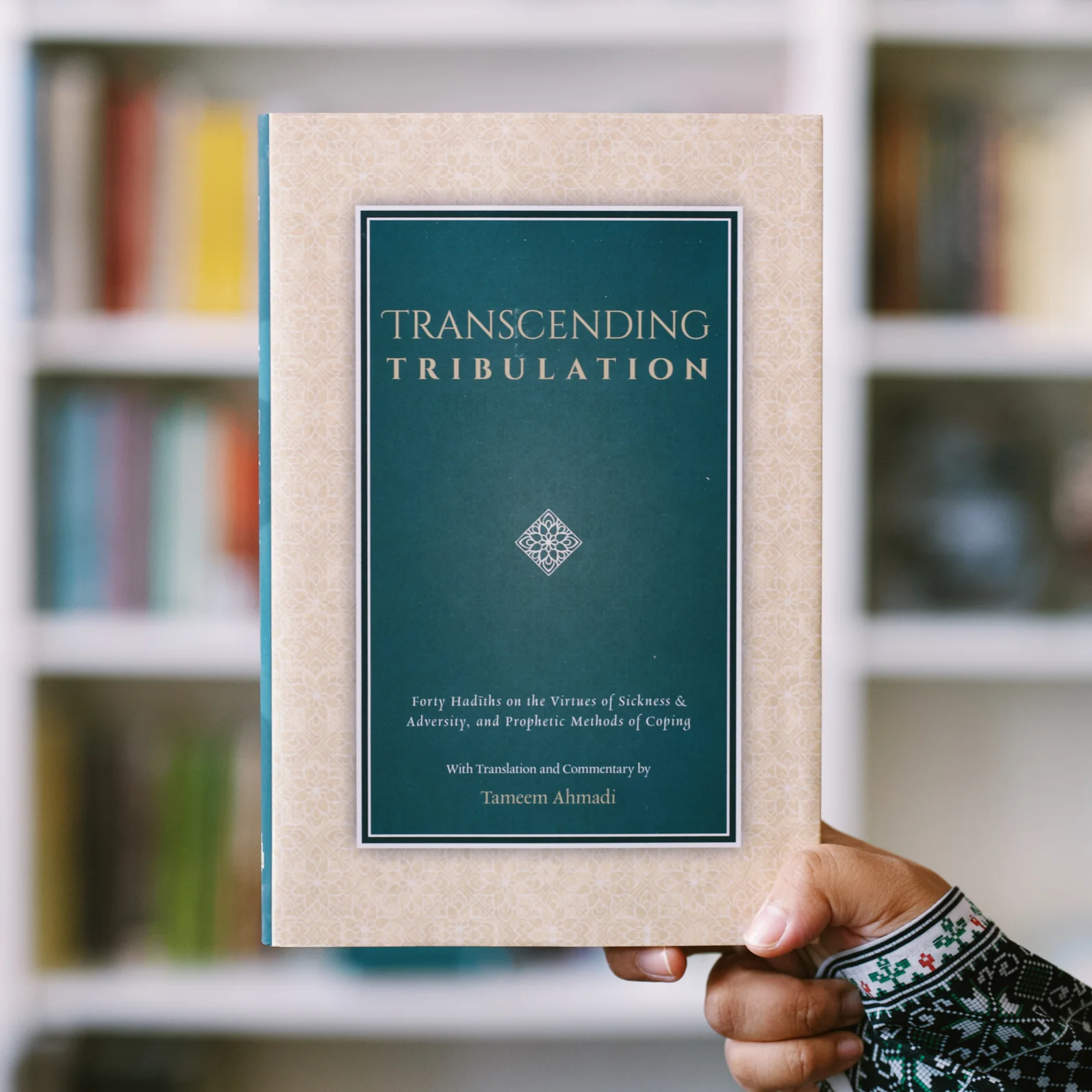
Transcending Tribulation
Shaykh Tameem Ahmadi (commentary)
Hardback, 180 pages
9781968496005
40 Hadith on the Virtues of Sickness & Adversity and Prophetic Methods of Coping
Life in this world comes with a simple truth: it’s not always easy. We all face sickness, pain, loss, and struggle—and ultimately, death. Yet revelation reminds us that death is only the gateway to eternal life. Without this perspective, life’s hardships can feel heavier, and family, friends or even therapy can only help so much. When the soul is disconnected from its Creator—a sense of emptiness remains.
To truly rise above hardship, we must see with the heart. What appears as loss may hold purpose, and what feels like pain may be part of our healing. This collection of prophetic sayings helps us see adversity, sickness, and stress not as meaningless suffering, but as hidden mercy and wisdom. Through this lens, hardship becomes a pathway to something greater—peace, clarity, and nearness to Allah.
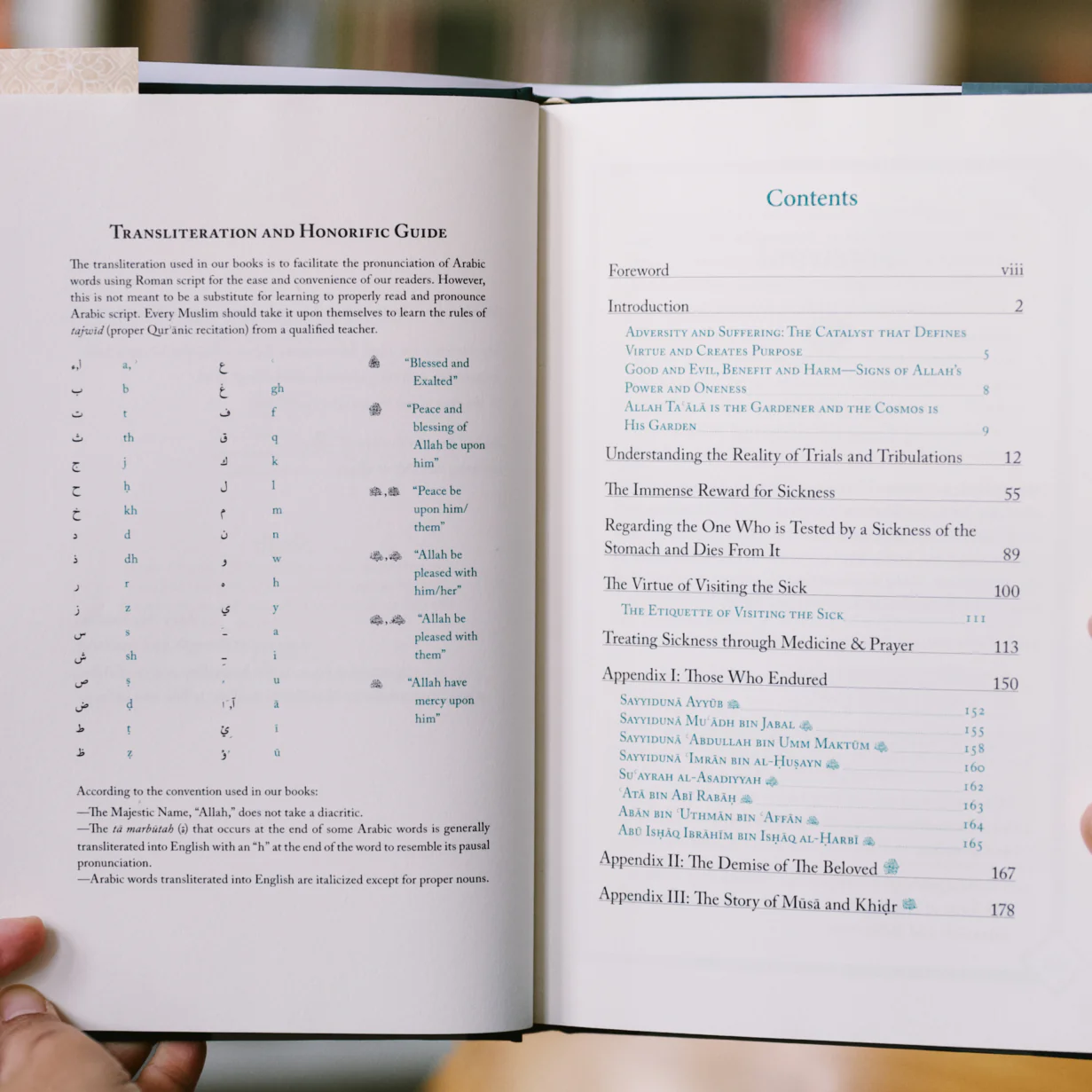
Contents
Understanding the Reality of Trials and Tribulations
The Immense Reward for Sickness
Regarding the One Who is Tested by a Sickness of the Stomach and Dies From It
The Virtue of Visiting the Sick
Treating Sickness through Medicine & Prayer
Those Who Endured
The Demise of The Belovedﷺ
The Story of Musa and Khidr
Product Information
Product Information
Shipping & Returns
Shipping & Returns


Transcending Tribulation
Transcending Tribulation
Shaykh Tameem Ahmadi (commentary)
Hardback, 180 pages
9781968496005
40 Hadith on the Virtues of Sickness & Adversity and Prophetic Methods of Coping
Life in this world comes with a simple truth: it’s not always easy. We all face sickness, pain, loss, and struggle—and ultimately, death. Yet revelation reminds us that death is only the gateway to eternal life. Without this perspective, life’s hardships can feel heavier, and family, friends or even therapy can only help so much. When the soul is disconnected from its Creator—a sense of emptiness remains.
To truly rise above hardship, we must see with the heart. What appears as loss may hold purpose, and what feels like pain may be part of our healing. This collection of prophetic sayings helps us see adversity, sickness, and stress not as meaningless suffering, but as hidden mercy and wisdom. Through this lens, hardship becomes a pathway to something greater—peace, clarity, and nearness to Allah.
Contents
Understanding the Reality of Trials and Tribulations
The Immense Reward for Sickness
Regarding the One Who is Tested by a Sickness of the Stomach and Dies From It
The Virtue of Visiting the Sick
Treating Sickness through Medicine & Prayer
Those Who Endured
The Demise of The Belovedﷺ
The Story of Musa and Khidr
Product Information
Product Information
Shipping & Returns
Shipping & Returns
Description
Shaykh Tameem Ahmadi (commentary)
Hardback, 180 pages
9781968496005
40 Hadith on the Virtues of Sickness & Adversity and Prophetic Methods of Coping
Life in this world comes with a simple truth: it’s not always easy. We all face sickness, pain, loss, and struggle—and ultimately, death. Yet revelation reminds us that death is only the gateway to eternal life. Without this perspective, life’s hardships can feel heavier, and family, friends or even therapy can only help so much. When the soul is disconnected from its Creator—a sense of emptiness remains.
To truly rise above hardship, we must see with the heart. What appears as loss may hold purpose, and what feels like pain may be part of our healing. This collection of prophetic sayings helps us see adversity, sickness, and stress not as meaningless suffering, but as hidden mercy and wisdom. Through this lens, hardship becomes a pathway to something greater—peace, clarity, and nearness to Allah.
Contents
Understanding the Reality of Trials and Tribulations
The Immense Reward for Sickness
Regarding the One Who is Tested by a Sickness of the Stomach and Dies From It
The Virtue of Visiting the Sick
Treating Sickness through Medicine & Prayer
Those Who Endured
The Demise of The Belovedﷺ
The Story of Musa and Khidr