Twitter and Tear Gas: The Power and Fragility of Networked Protest
Zeynep Tufekci
Paperback, 360 pages
9780300234176
To understand a thwarted Turkish coup, an anti–Wall Street encampment, and a packed Tahrir Square, we must first comprehend the power and the weaknesses of using new technologies to mobilize large numbers of people. An incisive observer, writer, and participant in today’s social movements, Zeynep Tufekci explains in this accessible and compelling book the nuanced trajectories of modern protests—how they form, how they operate differently from past protests, and why they have difficulty persisting in their long-term quests for change.
Tufekci speaks from direct experience, combining on-the-ground interviews with insightful analysis. She describes how the internet helped the Zapatista uprisings in Mexico, the necessity of remote Twitter users to organize medical supplies during Arab Spring, the refusal to use bullhorns in the Occupy Movement that started in New York, and the empowering effect of tear gas in Istanbul’s Gezi Park. These details from life inside social movements complete a moving investigation of authority, technology, and culture—and offer essential insights into the future of governance.
Zeynep Tufekci is a contributing opinion writer for The Atlantic and the New York Times, associate professor at the University of North Carolina School of Information and Library Science, and a faculty associate at the Harvard Berkman Klein Center for Internet and Society.
Contents
Part 1: Making a Movement
1. A Networked Public
2. Censorship and Attention
3. Leading the Leaderless
4. Movement Cultures
Part 2: A Protester's Tools
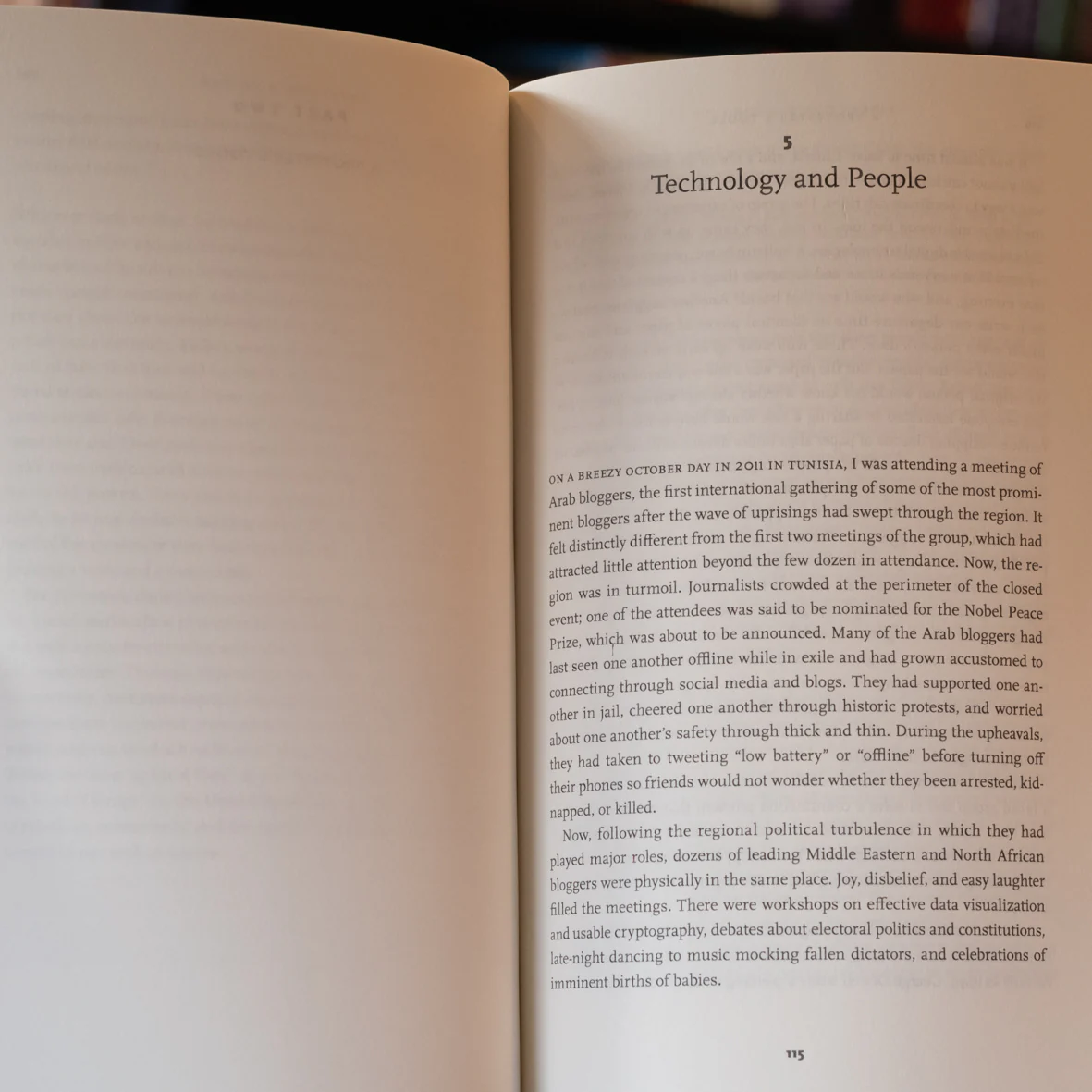
5. Technology and People
6. Platforms and Algorithms
7. Names and Connections
Part 3: After the Protests
8. Signaling Power and Singaling to Power
9. Governments Strike Back
Epilogue: The Uncertain Climb
Product Information
Product Information
Shipping & Returns
Shipping & Returns



Twitter and Tear Gas: The Power and Fragility of Networked Protest
Twitter and Tear Gas: The Power and Fragility of Networked Protest
Zeynep Tufekci
Paperback, 360 pages
9780300234176
To understand a thwarted Turkish coup, an anti–Wall Street encampment, and a packed Tahrir Square, we must first comprehend the power and the weaknesses of using new technologies to mobilize large numbers of people. An incisive observer, writer, and participant in today’s social movements, Zeynep Tufekci explains in this accessible and compelling book the nuanced trajectories of modern protests—how they form, how they operate differently from past protests, and why they have difficulty persisting in their long-term quests for change.
Tufekci speaks from direct experience, combining on-the-ground interviews with insightful analysis. She describes how the internet helped the Zapatista uprisings in Mexico, the necessity of remote Twitter users to organize medical supplies during Arab Spring, the refusal to use bullhorns in the Occupy Movement that started in New York, and the empowering effect of tear gas in Istanbul’s Gezi Park. These details from life inside social movements complete a moving investigation of authority, technology, and culture—and offer essential insights into the future of governance.
Zeynep Tufekci is a contributing opinion writer for The Atlantic and the New York Times, associate professor at the University of North Carolina School of Information and Library Science, and a faculty associate at the Harvard Berkman Klein Center for Internet and Society.
Contents
Part 1: Making a Movement
1. A Networked Public
2. Censorship and Attention
3. Leading the Leaderless
4. Movement Cultures
Part 2: A Protester's Tools
5. Technology and People
6. Platforms and Algorithms
7. Names and Connections
Part 3: After the Protests
8. Signaling Power and Singaling to Power
9. Governments Strike Back
Epilogue: The Uncertain Climb
Original: $16.86
-70%$16.86
$5.06Product Information
Product Information
Shipping & Returns
Shipping & Returns
Description
Zeynep Tufekci
Paperback, 360 pages
9780300234176
To understand a thwarted Turkish coup, an anti–Wall Street encampment, and a packed Tahrir Square, we must first comprehend the power and the weaknesses of using new technologies to mobilize large numbers of people. An incisive observer, writer, and participant in today’s social movements, Zeynep Tufekci explains in this accessible and compelling book the nuanced trajectories of modern protests—how they form, how they operate differently from past protests, and why they have difficulty persisting in their long-term quests for change.
Tufekci speaks from direct experience, combining on-the-ground interviews with insightful analysis. She describes how the internet helped the Zapatista uprisings in Mexico, the necessity of remote Twitter users to organize medical supplies during Arab Spring, the refusal to use bullhorns in the Occupy Movement that started in New York, and the empowering effect of tear gas in Istanbul’s Gezi Park. These details from life inside social movements complete a moving investigation of authority, technology, and culture—and offer essential insights into the future of governance.
Zeynep Tufekci is a contributing opinion writer for The Atlantic and the New York Times, associate professor at the University of North Carolina School of Information and Library Science, and a faculty associate at the Harvard Berkman Klein Center for Internet and Society.
Contents
Part 1: Making a Movement
1. A Networked Public
2. Censorship and Attention
3. Leading the Leaderless
4. Movement Cultures
Part 2: A Protester's Tools
5. Technology and People
6. Platforms and Algorithms
7. Names and Connections
Part 3: After the Protests
8. Signaling Power and Singaling to Power
9. Governments Strike Back
Epilogue: The Uncertain Climb